
Recall Readiness in Enterprise Dealerships: Why Workflow Governance Matters


Camila Kohles
Senior Content & Social Strategy Manager
Each year, millions of vehicles are recalled worldwide due to safety-related defects. In the United States alone, the National Highway Traffic Safety Administration (NHTSA) reported more than 1,000 safety recalls in 2024, affecting tens of millions of vehicles and automotive components.
Vehicle Safety Recalls Week serves as an important reminder for consumers to check their VIN and schedule necessary repairs. For dealership groups and enterprise service networks, recall readiness is part of ongoing operational governance, supported by consistent intake workflows and documented verification processes.
When a recall is issued, organizations must ensure that recall checks are:
- Performed consistently
- Properly documented
- Traceable months or years later
- Standardized across every location and service lane
In large-scale dealership operations, that distinction matters.

Recalls Are Increasing in Volume and Complexity
Vehicle recalls are not rare exceptions. They are a recurring and structural part of the automotive ecosystem.
Global supply chains, increasingly complex electronics, over-the-air updates, and regulatory oversight have made recalls more visible and more frequent. Public databases allow consumers to check recall status instantly using their VIN or license plate.
For service organizations, this visibility creates new expectations:
- Customers expect accurate recall verification at intake.
- Regulators expect proper documentation.
- Enterprise leadership expects consistency across locations.
The responsibility extends beyond completing repairs. Service organizations must be able to show that recall processes are controlled, repeatable, and defensible.
Where Recall Processes Break Down
On paper, checking for an open recall is straightforward. Most markets provide centralized databases. In the U.S., for example, NHTSA’s VIN lookup tool allows recall verification in seconds.
Operationally, however, recall checks are embedded within broader intake workflows. That is where inconsistencies emerge.
In many dealership environments:
- Vehicle identification is manually entered.
- VINs are typed under time pressure.
- Intake steps vary by advisor.
- Documentation is handled differently across lanes.
- Proof of recall verification is not consistently attached to repair orders.
These variations can go unnoticed in a single store. In large dealership groups, they multiply and affect visibility and control.
An incorrectly captured VIN can result in a missed recall match.
A recall check performed but not documented creates audit exposure.
An inconsistent intake process makes compliance difficult to verify at group level.
The root cause typically sits within workflow design, not necessarily in individual effort.
Documentation Is Organizational Protection
For enterprise dealer groups, recall management sits at the intersection of service operations, compliance, risk management, and brand trust.
If a vehicle later becomes subject to investigation, legal review, or customer dispute, documentation becomes critical.
The ability to demonstrate that:
- The vehicle was correctly identified
- A recall check was performed
- The results were recorded
- The customer was informed
… can materially affect exposure and defensibility.
These expectations are well established in regulated environments, where process maturity is defined by traceability. In that context, if an action cannot be verified, it effectively did not happen.
Reliable documentation strengthens customer trust while reducing organizational exposure.

Multi-Location Complexity Magnifies the Risk
Enterprise dealership groups face a unique challenge: scale.
Enterprise dealership groups operate across multiple locations, advisors, and systems. Informal consistency does not scale across distributed operations.
When recall intake processes vary between:
- Locations
- Advisors
- Service lanes
- DMS configurations
… executive leadership loses visibility into whether recall checks are truly standardized.
Without structured data capture, recall readiness becomes dependent on individual behavior rather than system design.
Enterprise groups increasingly recognize that compliance cannot rely on “best effort.” It must rely on workflow architecture.

Recall Readiness Begins with Accurate Vehicle Identification
Every recall check starts with one critical variable: the vehicle’s identity.
The VIN is the anchor for recall databases, service history, warranty claims, and safety bulletins. If VIN capture is inaccurate or inconsistent, every downstream step is compromised.
Manual VIN entry remains common in many service environments. Yet manual processes introduce friction and error risk, particularly in high-throughput lanes.
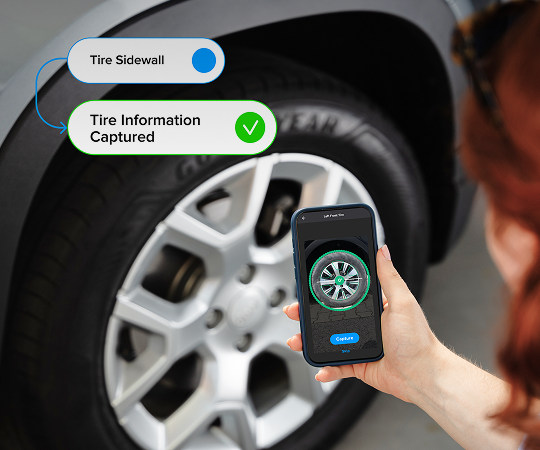
Mobile-based vehicle identification tools, including VIN scanning and license plate scanning technologies, are increasingly being used to reduce manual entry and ensure accuracy at intake.
Several large-scale U.S. tire retailers have already embedded automated DOT and vehicle identification tools into their service workflows to reduce manual variability and strengthen compliance documentation. For example, Discount Tire, the world’s largest independent tire retailer, implemented real-time DOT scanning technology to standardize capture and accelerate inspections across its network.
When vehicle identity is captured automatically and tied directly to the service workflow, recall checks become:
- Faster
- More reliable
- Less dependent on typing accuracy
- Easier to document consistently
Vehicle identification may appear administrative. In reality, it is foundational to compliance integrity.
Structured Intake Workflows Reduce Variability
Beyond identification, recall readiness depends on whether the recall check is embedded as a required step in the intake workflow.
In high-performing dealership operations:
- Recall checks are system-triggered.
- Results are automatically attached to service records.
- Status is visible to both advisor and technician.
- Documentation is retained without manual intervention.
When recall verification is integrated directly into mobile inspection or intake tools, it becomes part of a standardized process rather than an optional step.
This same principle applies to other inspection domains. For example, tire inspections and DOT sidewall data capture are increasingly being digitized to ensure consistent documentation and traceability. The broader trend is clear: structured data capture reduces operational variability.
Recall readiness follows the same logic.
Compliance Maturity Is Becoming a Competitive Differentiator
Customers are more informed than ever. Public recall databases are widely accessible. Transparency expectations continue to rise.
Dealership groups that can confidently state:
- Recall checks are performed on every vehicle
- Verification is documented
- Processes are standardized across locations
- Records are digitally traceable
… demonstrate operational maturity.
This level of control supports regulatory alignment while reinforcing customer trust and internal accountability.
Enterprise service organizations are increasingly viewing recall readiness as part of a larger shift toward digitized, data-backed service workflows.

From Seasonal Awareness to System Design
Vehicle Safety Recalls Week is a valuable awareness initiative. It encourages drivers to check their vehicles and schedule repairs. That message is important.
For dealership and service enterprises, recall readiness must be embedded in system design rather than periodic awareness efforts.
When recall verification is:
- Embedded in structured intake workflows
- Anchored to accurate vehicle identification
- Automatically documented
- Consistently applied across every lane
… recall management becomes predictable, scalable, and defensible.
The Bigger Picture: Workflow Determines Safety Outcomes
Safety processes are only as strong as the workflows behind them.
The same principle applies to:
- VIN capture
- Tire DOT documentation
- Inspection reporting
- Service compliance logs
- Recall verification
In each case, the difference between intention and execution lies in operational design.
High-performing dealership groups recognize that compliance, trust, and efficiency are outcomes of well-architected intake and inspection workflows.
Recall readiness reflects operational maturity. In enterprise automotive service environments, disciplined workflow design is what protects both customers and the organization.