
TireBuddy ToolKit Is Now Production-Ready for React Native


Anyline Product Team
Product vision and development
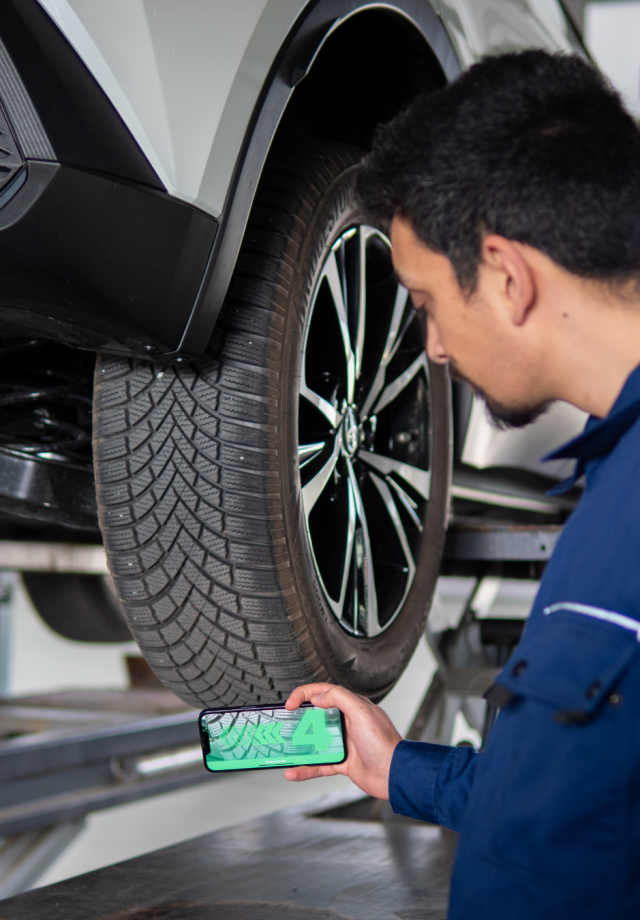
TireBuddy ToolKit – our digital tire inspection solution designed for app integrations – is now available for React Native. What started as a focused delivery for selected customers has been packaged, documented, and prepared for broader adoption.
Customers now have the option to integrate TireBuddy features natively for Android and iOS, or using React Native or Flutter, making it easier to integrate tread measurement, tire identification, VIN reading, license plate identification, and more into vehicle inspection applications.
React Native is a widely used framework for application development that is especially common within the automotive industry. In our discussions with customers, the message was clear: they want to integrate TireBuddy ToolKit features without sacrificing the efficiencies of cross-platform development provided by React Native. After initial development, and following a year of use by selected partners and customers in real-world deployments, the TireBuddy React Native wrapper is now available for broader use.
Improving Integration and Developer Experience
The React Native wrapper is designed for stable, production-ready integration of the TireBuddy SDK and APIs rather than acting as a thin bridge over native code. Improvements include using typed async API calls instead of the earlier event-driven pattern. Tire tread scans return clear result states such as completed, aborted, or failed, giving developers a more predictable and controlled integration model and making it easier to build reliable application logic around scanning, retries, and user messaging. There is full TypeScript support, utility methods for SDK and wrapper versioning, a structured configuration model, and feedback APIs for comments, tread depth corrections, and tire identification. For teams using Expo development builds, the config plugin handles camera permissions and Android repository setup automatically, helping to reduce integration effort. Combined with improved compatibility across supported React Native versions and a more stable native integration layer on iOS and Android, this simplifies setup and lowers the barrier to evaluating the product within an existing application. For customers running operational workflows across fleets or inspection applications, the TireBuddy ToolKit also supports additional context to correlate scans and record tire position data.
Supporting Faster Deployment and Iteration
The immediate impact of the release of the TireBuddy React Native wrapper is broader availability, while also shortening time to deployment for apps integrating TireBuddy features. The wrapper is public, versioned, and built on a stable integration model. This reduces evaluation time, shortens implementation cycles, and provides a clearer foundation for scaling and ongoing product decisions.
In the long term, this release improves how updates are delivered and adopted, and creates a more structured path for iteration and customer feedback over time. Compared to project-based integrations, this approach provides a more consistent foundation for continued development.
Moving Toward a Standardized Integration Model
With the React Native wrapper now production-ready, TireBuddy ToolKit is easier to integrate, evaluate, and scale within existing application environments. Teams can add tire inspection capabilities without changing their architecture or giving up cross-platform efficiency.
The release also marks a move toward a more standardized integration model, supporting faster implementation, clearer iteration cycles, and a more consistent foundation for ongoing development.